It’s been a hectic twelve months, and the forthcoming year looks to be as full.
During 2017 I’ve spent much of my non-working hours grafting away on the first draft of my second book, Living The Dream? By the beginning of December that draft was in the proverbial bag, and it’s currently with some of my compatriots for preliminary review/endorsement. My hope for Living The Dream? is to seek out a literary agent and pursue a more traditional publishing route. So there’s still a long, long road ahead. But hopefully, by the close of this year, it’s material form won’t be too far away.
Surprisingly though, the beginning of this year finds me working on my Opus one again (Love: Expressed). At the back end of 2017 I was blessed to receive an unexpected invitation to contribute to an excellent online Biblical Studies/Discipleship resource called Scribe. So for the next few weeks I’ll have my hands full with breaking Love: Expressed’s chapters down into bite-sized chunks for some video modules that will be filmed in February.
Scribe itself will be launching it’s platform this summer, and will provide a wide range of free, online courses which will bring robust training to the church in an accessible form that aims to deepen one’s understanding of faith and enhance the journey of discipleship. It’s ecumenical in its approach, hosting a range of voices and traditions. And it’s video format will be perfect for personal study and also for group use in Church house groups etc. As soon as it launches, I’ll let you know.
So watch this space, as 2018 seems to be full of new and unexpected roads for me!
For obvious reasons then, I’ve not really had the chance to do much blogging this year. To be honest, if I do get the chance to write, I’d rather be writing a book than a blog.
Sorry 😦
But I’ve still been determined as ever to read and study as much as I can. And my reading this year has taken me to some fascinating and sobering territories.
Which makes this specific post all the more difficult, because I’ve read many great books this year – many that I’ve given 5* reviews and shouted about on my social media platforms.
Trying to to select a few favourites from a host of favourites has been a headache, to say the least. So I feel it necessary to say a BIG THANK YOU to all the authors whose works I have immersed myself in over the past twelve months. And for the sake of those books that haven’t made it on here, please check out my Goodreads.com account! (Also, if you’re on Goodreads, feel free to send me a friend request).
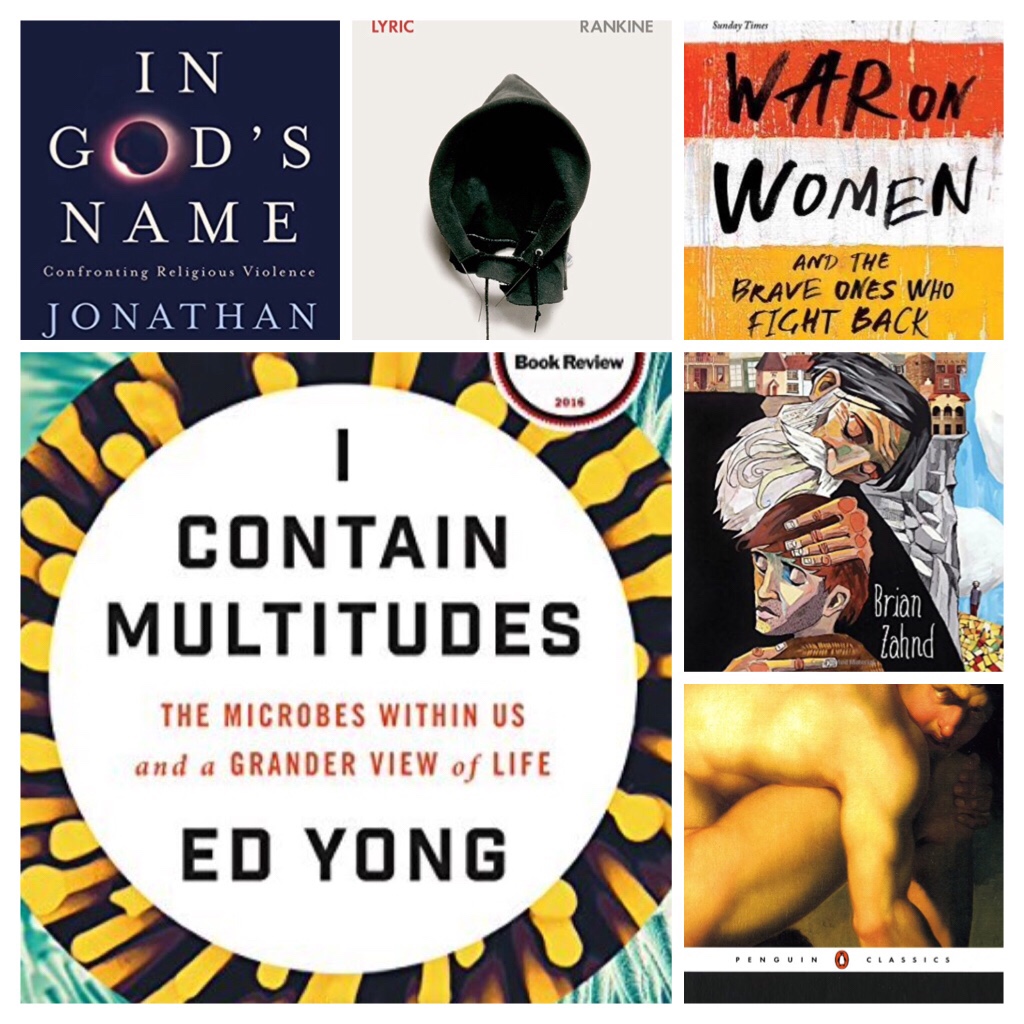
In no particular order then, here’s my favourite reads of 2017 (but if you’re after a favourite, it would certainly be Claudia Rankine!);
[Please note, instead of putting my own thoughts here (which can be found in the review sections of Amazon and Goodreads etc.), I’ve provided the books own synopsis/endorsement.]
Enjoy and explore!
Not In God’s Name: Confronting Religious Violence, by Jonathan Sacks.
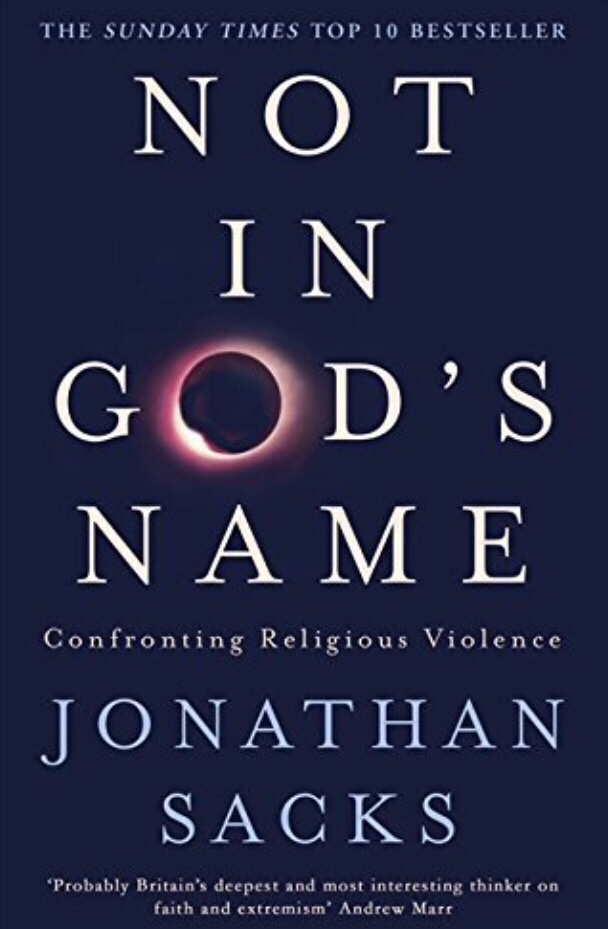
Despite predictions of continuing secularisation, the twenty-first century has witnessed a surge of religious extremism and violence in the name of God.
In this powerful and timely book, Jonathan Sacks explores the roots of violence and its relationship to religion, focusing on the historic tensions between the three Abrahamic faiths: Judaism, Christianity and Islam.
Drawing on arguments from evolutionary psychology, game theory, history, philosophy, ethics and theology, Sacks shows how a tendency to violence can subvert even the most compassionate of religions. Through a close reading of key biblical texts at the heart of the Abrahamic faiths, Sacks then challenges those who claim that religion is intrinsically a cause of violence, and argues that theology must become part of the solution if it is not to remain at the heart of the problem.
This book is a rebuke to all those who kill in the name of the God of life, wage war in the name of the God of peace, hate in the name of the God of love, and practise cruelty in the name of the God of compassion.
For the sake of humanity and the free world, the time has come for people of all faiths and none to stand together and declare: Not In God’s Name.
The War on Women: And the Brave Ones who Fight Back, by Sue Lloyd-Roberts
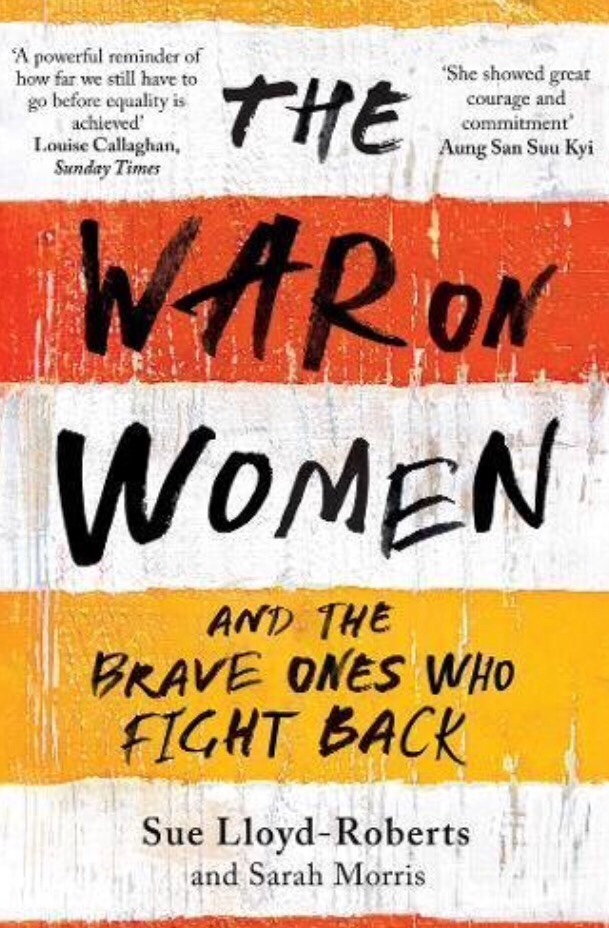
In 1973, Sue Lloyd-Roberts joined ITN as a news trainee and went on to be one of the UK’s first video-journalists to report from the bleak outposts of the Soviet Union. Travelling as a tourist, she also gained access to some of the world’s most impenetrable places like China, Tibet and Burma. During her 40-year-long career she witnessed the worst atrocities inflicted on women across the world. But in observing first-hand the war on the female race she also documented their incredible determination to fight back.
The War on Women brings to life the inconceivable and dangerous life Sue led. It tells the story of orphan Mary Merritt who, age sixteen, instead of being released from the care of nuns was interned by them in a Magdalen Laundry and forced to work twelve hours a day six days a week, without pay, for over a decade. She gives voice to Maimouna, the woman responsible for taking over her mother’s role as the village female circumciser in The Gambia and provides a platform for the 11-year-old Manemma, who was married off in Jaipur at the age of six. From the gender pay gap in Britain to forced marriage in Kashmir and from rape as a weapon of war to honour killings, Sue has examined humankind’s history and takes us on a journey to analyse the state of women’s lives today. Most importantly she acts as a mouthpiece for the brave ones; the ones who challenge wrongdoing; the ones who show courage no matter how afraid they are; the ones who are combatting violence across the globe; the ones who are fighting back.
Sue sadly died in 2015, shortly after writing this book, today she is widely recognised as one of the most acclaimed television journalists of her generation. This book is the small tribute to the full and incredible life she lived and through it these women’s voices are still being heard.
Citizen: An American Lyric, by Claudia Rankine
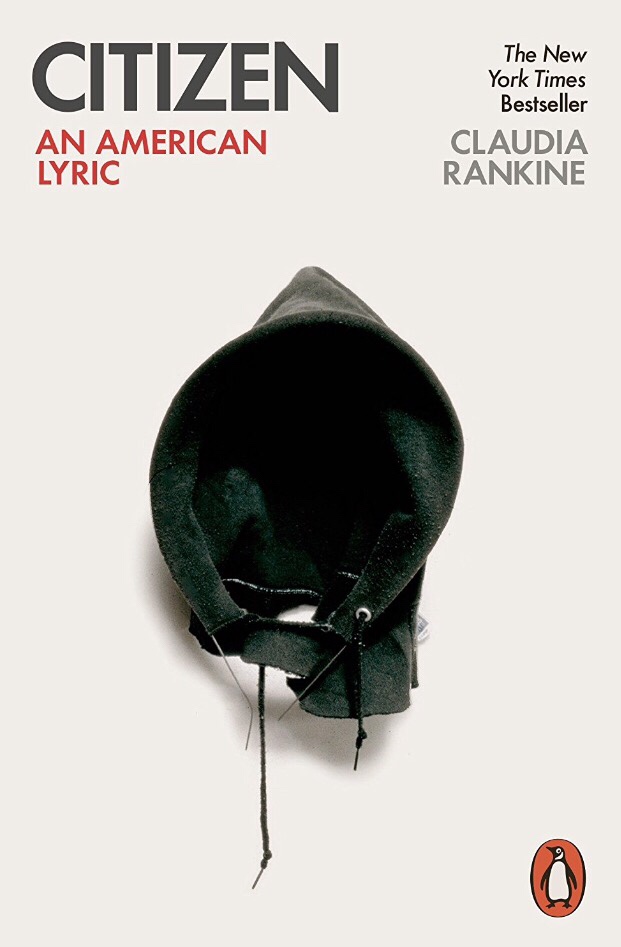
In this moving, critical and fiercely intelligent collection of prose poems, Claudia Rankine examines the experience of race and racism in Western society through sharp vignettes of everyday discrimination and prejudice, and longer meditations on the violence – whether linguistic or physical – which has impacted the lives of Serena Williams, Zinedine Zidane, Mark Duggan and others.
Citizen weaves essays, images and poetry together to form a powerful testament to the individual and collective effects of racism in an ostensibly ‘post-race’ society.
Sinners in the Hands of a Loving God: The Scandalous Truth of the Very Good News, by Brian Zahnd

God s attitude toward you is one of unwavering affection. You have nothing to fear from God. Rather than constantly being disappointed by our failures and mistakes, God looks with unconditional love upon all his sons and daughters. Even the prodigals.
“Brian Zahnd walks boldly into the violent propensity of so much Christian theology and preaching that has wounded so many people, a propensity in which he himself has participated. He not only shows what bad, irresponsible theology this is, pervasive as it continues to be; he exposes the ‘hackneyed trope of dispensationalism’ that feeds so much worldly violence and that authorizes so much wounding. But more than that, in his poetic mode, Zahnd invites to an alternative that is grounded not in ‘Biblicism’ but in the reality of Jesus who embodies the inexplicable love of God that passes all human understanding. Zahnd writes as one emancipated to evangelical joy. He invites his readers to walk with him into such a God-given vocation that honors the God of love and that loves the neighbor.”
–Walter Brueggemann, Columbia Theological Seminary
Frankenstein: Or, the Modern Prometheus (Penguin Classics Edition), by Mary Shelly
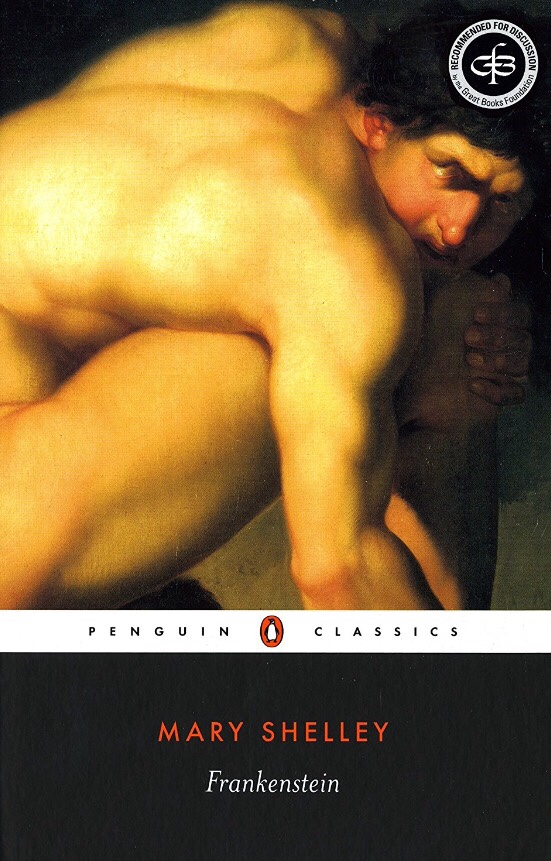
A terrifying vision of scientific progress without moral limits, Mary Shelley’s Frankenstein leads the reader on an unsettling journey from the sublime beauty of the Swiss alps to the desolate waste of the arctic circle. This Penguin Classics edition is edited with an introduction and notes by Maurice Hindle.
Obsessed with the idea of creating life itself, Victor Frankenstein plunders graveyards for the material with which to fashion a new being, shocking his creation to life with electricity. But this botched creature, rejected by its creator and denied human companionship, sets out to destroy Frankenstein and all that he holds dear. Mary Shelley’s chilling gothic tale was conceived when she was only eighteen, living with her lover Percy Shelley near Lord Byron’s villa on Lake Geneva. It would become the world’s most famous work of Gothic horror, and Frankenstein’s monster an instantly-recognisable symbol of the limits of human creativity.
Based on the third edition of 1831, this volume contains all the revisions Mary Shelley made to her story, as well as her 1831 introduction and Percy Shelley’s preface to the first edition. This revised edition includes as appendices a select collation of the texts of 1818 and 1831 together with ‘A Fragment’ by Lord Byron and Dr John Polidori’s ‘The Vampyre: A Tale’.
I Contain Multitudes: The Microbes Within us and a Grander View of Life, by Ed Yong
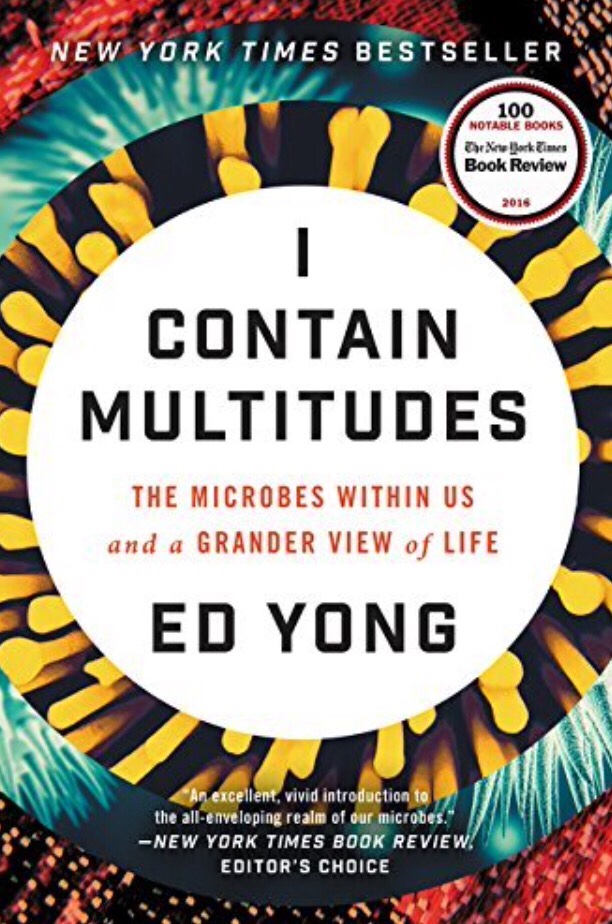
Your body is teeming with tens of trillions of microbes. It’s an entire world, a colony full of life.
In other words, you contain multitudes.
They sculpt our organs, protect us from diseases, guide our behaviour, and bombard us with their genes. They also hold the key to understanding all life on earth.
In I Contain Multitudes, Ed Yong opens our eyes and invites us to marvel at ourselves and other animals in a new light, less as individuals and more as thriving ecosystems.
You’ll never think about your mind, body or preferences in the same way again.
 TRISTAN SHERWIN
Leave a comment