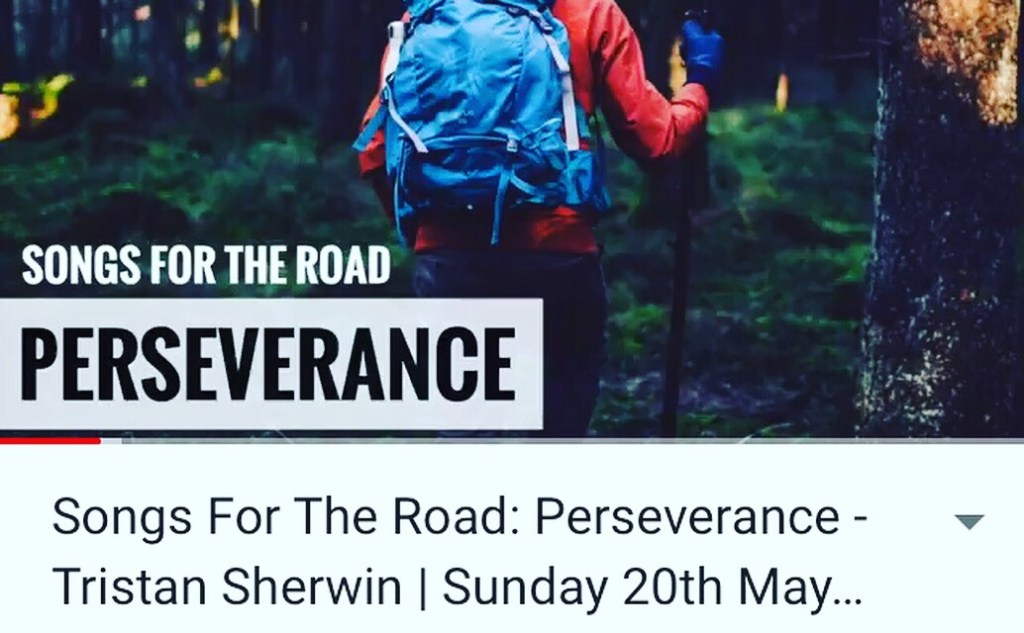
As I shared on my social media accounts recently, at Metro Christian Centre we’re journeying through the Psalms of Ascent. Last Sunday (20/5/18), I covered Psalm 129, which you can listen to on our YouTube podcast.
Sadly though, a few minutes were clipped from the beginning of the recording, so below are my notes for those who are interested. Please be aware that I’ve not done a thorough edit of these, and there were some sentiments shared on Sunday morning that are not noted below (so the YouTube clip is still worth listening to).
________
“From my earliest youth my enemies have persecuted me. Let all Israel repeat this: From my earliest youth my enemies have persecuted me, but they have never defeated me.
My back is covered with cuts, as if a farmer had plowed long furrows. But the Lord is good; he has cut me free from the ropes of the ungodly.
May all who hate Jerusalem be turned back in shameful defeat.
May they be as useless as grass on a rooftop, turning yellow when only half grown, ignored by the harvester, despised by the binder.
And may those who pass by refuse to give them this blessing: “The Lord bless you; we bless you in the Lord’s name.”
“From my earliest youth my enemies have persecuted me. Let all Israel repeat this: From my earliest youth my enemies have persecuted me, but they have never defeated me.
My back is covered with cuts, as if a farmer had plowed long furrows. But the Lord is good; he has cut me free from the ropes of the ungodly.
May all who hate Jerusalem be turned back in shameful defeat.
May they be as useless as grass on a rooftop, turning yellow when only half grown, ignored by the harvester, despised by the binder.
And may those who pass by refuse to give them this blessing: “The Lord bless you; we bless you in the Lord’s name.”
Psalm 129 (NLT)
SONGS OF THE OPPRESSED
I sometimes pray the psalms in my devotional times, but there’s some that I struggle to pray—for various reasons.
Some of them are Psalms exactly like Psalm 129. And I struggle to pray words like these because it feels wrong of me to import into these words my current issues in life. I’ll be honest—and hopefully I’m not just speaking for myself—but for me to read/pray the words of this psalm as my own seems almost sacrilegious, or like I’m taking it in vain, because I feel that I am disrespecting and trivialising the history, emotions and gravity of the author’s experience of suffering.
So when I come to Psalms like this, I try to silence and stop myself from importing my self into this song. And instead I need to approach the Psalm as someone who is listening to the heart’s cry and pain of the others who are praying through these words.
[NB: It reminds me of our prayer night for Congo, at the start of this year—I struggled to pray that night. Not because of a lack of language, or concern. But as I was praying, I became aware that I was praying alongside people who had experienced the injustice we were praying about first hand. So there came a point during the night, when I felt the Spirit prompting me shut up and start listening—to listen firstly to the cries of those around me, and to secondly also hear their confidence in God as they prayed. It’s not that I began to spectate—but that my participation moved from me attempting to vocalise a suffering I’ve never encountered, and instead became about hearing and being formed by the hearts of others as they express themselves to God]
I’m saying all this because I’ve wrestled with this Psalm this week—or, maybe the real truth of it is that this Psalm has wrestled with me. And the reason for this personal discomfort is this; there is an experience captured within these words that I cannot relate to—it’s an experience that is foreign to me.
This is a song about oppression. Or to say that another way; this is a Song of the Oppressed.
And with the exception of a few us, most of us have no idea what oppression feels like. Yes, we go through hard times—we do experience pain, heartache, and suffering. But for most of us, because we are a part of the dominate culture in our society (and in the world), even when we do experience those things, we still retain many of our freedoms and a sense of dignity, along with having access to support and help.
However, for a good number of people around the globe, they find themselves in a perpetual state of being trampled over and being left in a powerless place—with no freedoms or assistance or dignity…
This is their voice coming through this Psalm—not ours.
To be even clearer—the imagery in this Psalm is not describing having a bad day, or about us personally going through a rough patch. It can often be easy for us, especially as individuals in the Western-hemisphere, to come to this Psalm after having a rough day and to reduce the weight of it to being about our private, personal issues; because, understandably, they are what’s on our mind when we pray.
But having a “bad day”, or even encountering difficulty, does not, and can never compare to the language this Psalm uses to describe the nature of being dehumanised, oppressed and enslaved! The car failing to start, or the boiler breaking-down, or that person not saying something nice to me today, or the pressure of work, or the noisy neighbour, or the amount of homework we’ve got to do etc.—none of that can be described as being akin to having a back full of deep gouges that have been ploughed into it through oppression.
We cannot, and should not, trivialise this song.
The truth is, many of us will come to this Psalm as an outsider, of sorts, and so we need to listen and to learn from it, instead of appropriating its language and making it about our private, “first-world” problems.
That’s not to say that there isn’t any comfort to be had from this Psalm for those of us who face problems—there is comfort here! However, there’s also challenge, because of the example of faith that is presented here.
TWO STRANDS IN FOUR (First Half of the Psalm)
If we look at the first four verses, we’ll notice that there are two melodies of thought that weave together within them;
One melody is that there’s a sorrowful acknowledgment of the injustice that has or is being experienced. The psalmist talks of being persecuted and uses this vivid imagery of being trodden over and having deep troughs cut into their back like they were a field being ploughed. These are metaphors of slavery; of being whipped/scourged and bound. And this isn’t just as a one-time occurrence—but there has been a repetitive cycle of oppression throughout their lifetime. As the Psalmist writes at the opening of this song, “From my earliest youth my enemies have persecuted me—Let Israel now say—from my earliest youth my enemies have persecuted me”.
It’s worth pointing out the obvious here, btw—the composer of this song is not writing about themselves personally. This is a communal and generational song. What I mean by that is that within a few verses the writer has condensed the entire Old Testament story of people of Israel; a story full of slavery, captivity, exile and oppression under Empire’s like Egypt or Babylon, or even under their own repressive leadership. Their story has been full of hostility.
And yet, along with this first melody, there’s also a second melody of thought; there is this proclamation of God’s faithfulness. After each line of hardship, the Psalmist inserts a huge but:
“They’ve oppressed us since we were conceived… BUT they’ve never finished us off! They’ve cut long furrows down our backs—they’ve trampled on us, and abused us, and enslaved us, and dehumanised us—BUT God is good! He has cut the cords that the oppressors bound us with.”
This strikes me as odd—crazy almost—because you’d naturally think that these two melodies of thought cannot harmonise; you would think that these ideas would be at odds. Suffering as slaves doesn’t sound like God is being faithful, does it?
I know the Psalm speaks of chains/cords being cut and there being freedom—but Israel’s story is full of being liberated, and then being put in bondage again. The pilgrims that are singing this song also know that, as a people, they’ve had to endure prolonged, repetitive experiences of enslavement. Their history is not full of quick answers, or speedy escapes—or even long durations of peace and tranquillity.
And yet there arises this extra-ordinary confidence in the commitment and compassion of God.
I believe there’s two reasons for this confidence . . .
Firstly: They know that God’s plans and purposes are bigger than their own individual lives and their own generation.
I’m saying that because it’s crucial to understand that when the psalmist writes that “they’ve never been able to finish me off”—the me isn’t personal. It’s corporate—it’s an “us”, but it isn’t just about “us” now, either. Within the Bible’s story plenty of “mes” in Israel’s history were finished off, quite literally. People did die in wars and invasion, slavery and captivity—and in horrible ways.
So there’s a bigger identity here that the people singing this are including themselves within; they are the people that God has chosen to be vehicle of God’s blessing to the world.
And through their suffering as part of that larger identity—not just a personal “I”—they’ve seen that the promises of God outlast all oppressors; they’re confident that nothing and no one can stop God from achieving the Divine dream for the world! Nothing can separate God from his love.
Secondly: (the second reason for this confidence is this…)
As they’ve experienced oppression, they have learnt that God doesn’t leave them, but that God remains with them (in the suffering) and that God identifies with them in it.
In other words, they are still God’s people—God hasn’t swapped sides and is now with the oppressors. And as God’s people, when they are oppressed, God somehow also shares in that oppression—God’s not behind it, or the cause of it—but God goes through it with them; God allows himself to also be enslaved. (I do explain this a little more on the podcast).
Despite the oppression—or rather, as a direct consequence of their prolonged exposure to oppression—they have encountered a God who suffers with them and who can be trusted. Their faith in God then, is not a product of some blind-leap, or wishful thinking on their behalf, or even as a result their own determination and will-power to be faithful. On the contrary; their stick-ability to the things of God—their perseverance, their continual trust in God—is the result of God’s own faithfulness towards God’s purpose and towards those who are called to be an expression of that purpose. (the Apostle Paul writes something similar in Romans 8)
THE “GODS” HAVE ABANDONED US
From the first half of this Psalm, I find this example of faith extremely challenging!
I think I have faith; I act like I know what it means to persevere—and to persevere with putting my trust in God, and displaying that trust through my allegiance to God’s way—but the truth is, I haven’t got a clue.
Because in the reality of my non-oppressed life, my confidence in God often does hinge on such little, trivial things! And often, instead of considering myself as part of an identity larger than my “self” and my time—I’m often too consumed with my own little world.
My faith can be the very opposite of what this Psalm portrays. It centres around myself, it’s more interested in comfort than in God’s purposes, and it’s very short-sighted.
So when my little world doesn’t work out—I struggle to persevere with God just as a result of “first world” issues. There’s something about God’s character that my faith has to glean from those who have experienced oppression.
I’ll be honest; I don’t find myself singing a Song of the Oppressed—a song which continues to speak of a strong confidence in God, even in the midst of a prolonged powerless state. Often, I find myself whining along to the “Complaints Of the Uncomfortable”; where I moan at God because life isn’t running as smoothly as I would want it to be. So when I feel that life is uncomfortable, I wrongly assume that God isn’t faithful, and I excuse my own lack of commitment by choosing to believe that God abandoned me first.
That said, maybe there is some truth that we need to recognise in this sense of abandonment?
Maybe this sense of being forsaken is valid and real, because we have been forsaken—but not by God, but by the false god’s, or false images of God, that we have really put are confidence in?
Maybe, we need do need to hit rock bottom, so that the idols we have worshipped are exposed and shown to be useless?
The god of appetites, the god of our materialism and consumption. The god’s of our fame and self-inflated importance. The god of “self”; the god’s that tell us that our own strength, will-power, autonomy and talent can get us through—maybe when we suffer, it’s these “gods” that are shown to be worthless.
Our falls, our struggles, and our sufferings can provide us with a moment of clarity, and if we concede to the fall—if we stop spitting our dummy out because our other gods haven’t come into rescue us—then maybe we’ll recognise that the real God is still present. If we choose to be mature in those times of crisis, God might be able to make use of those moments and show us that it’s our idols that are deaf, blind and dumb—and that in those moments we can also realise that God is with us, suffering alongside us, in a way that won’t necessarily bring escape, but that will bring us through.
The challenge of this Psalm is to develop a more mature response and perspective on our experiences, and to stop acting like God has no sense of commitment. It’s “I” that has no sense of commitment.
BLESSING & CURSES (THE SECOND HALF)
But it’s not the only challenge here; the second half of this Psalm also challenges me.
The Psalmist is understandably angry at the injustice they’ve experienced—their anger is valid! Just because they know God is with them, doesn’t mean that they have to be happy about the pain they’ve endured.
And so, in this second part, the Psalmist vents that anger towards those who have tried to oppress them. Their prayer is that they will become fruitless and their schemes will be put to shame.
In other words, they, like most of us, do not want to see oppression prosper; they want it to end.
What humbles me here is that they don’t desire revenge; they don’t seek for their oppressors to be destroyed or to come to a violent end. And yet, sadly, they don’t seek to see them blessed either.
Their anger is justifiable—and, again it’s admirable that they don’t wish to see their oppressors killed—but they still, even as victims of oppression, don’t go far enough to put oppression to an end.
They’re taking a step in the right direction, but they haven’t finished the journey yet. They still desire to see their oppressors being despised, and ignored, and treated as worthless. But that’s oppression, too.
If we really want to see God’s plans and purposes come to pass, if we are seeking to be a part of the expression of that, if we desire to see all oppression cease, then this Psalm doesn’t take us far enough … because despising others and viewing others as worthless will just repeat the cycle of oppression, and those dehumanising attitudes towards others are normally the foundations of the bigger atrocity’s, like slavery and genocide, that follow after.
As a follower of Jesus, I believe that Jesus takes us further than this Psalm. In the Sermon on the Mount (Matt) and the Sermon on the Plain (Luke), we’re instructed to love our enemies. We’re told to not return their curses with our curses, and we are also instructed to not withhold blessing.
Jesus tells us bless those who curse us; we are, to use the words of verse 8 of this Psalm, to say “we bless you in the name of the Lord”.
This is also a challenge to my faith—often, I want pay back.
Again, anger is justified. But if we want justice, then it’s not about returning tit for tat. God’s Justice is about putting things right. God’s dream, as commissioned through Abraham and realised in Christ, is to see all the nations blessed.
God wants to rescue those who are oppressed, but God also wants to save all the oppressors.
And I don’t know about you, but it takes a lot of faith to believe that. I have to be committed to something much larger than just me and my own tribe. My own identity has to be baptised and taken up into the purposes of God to be able to persevere in an endeavour like that.
This Sunday is the celebration of Pentecost; when we remember God’s Spirit marrying itself to human flesh. Jesus had promised his disciples that the Spirit would imbue them with the power to live out God’s vision.
As Pentecostal’s we can often reduce this power to just being about healing or gifts, but it is so much more. This is about being empowered to love as God loves; being empowered to love our enemies; to bless them and not dehumanise them. We need this power if we are ever to see oppression cease.
Prayer:
May all our false gods—the other things we put our hopes in—be shown to be worthless and useless.
May we realise that they are as useless as the grass on a rooftop—grass that the harvesters ignore and that even the animals don’t eat.
May we, in midst of it all, come to an understanding that it is you, O God, who remains faithful, Who never forsakes us, And who’s love can never be separated from us.
May our commitment to you grow from a revelation of your faithfulness to us.
But May we also recognise your unswerving commitment to others—even our enemies. And may we realise that you also desire to save them from the malign ideas and drives that have possessed them.
May we seek to be a blessing to this world around us; a blessing that speaks of your love for all.
 TRISTAN SHERWIN
Leave a comment