“Are you warm, are you real, Mona Lisa?
Or just a cold and lonely, lovely work of art?”
— Mona Lisa, written by Nat King Cole, Ray Evans & Jay Livingston
SWIMMING IN A SEA OF ANXIETY
No one had told me that the fashion had changed.
In retrospect, I should have seen this coming. The transition from primary to secondary school had already levied its toll of changes that I was struggling with. The six-week holiday had barely furnished me with enough hours to learn how to master saying ‘morning break’ instead of ‘playtime’, and not nearly enough days to come to terms with the harsh “fact” that I had to say goodbye to my action figures.
Where was the time to think about fashion?
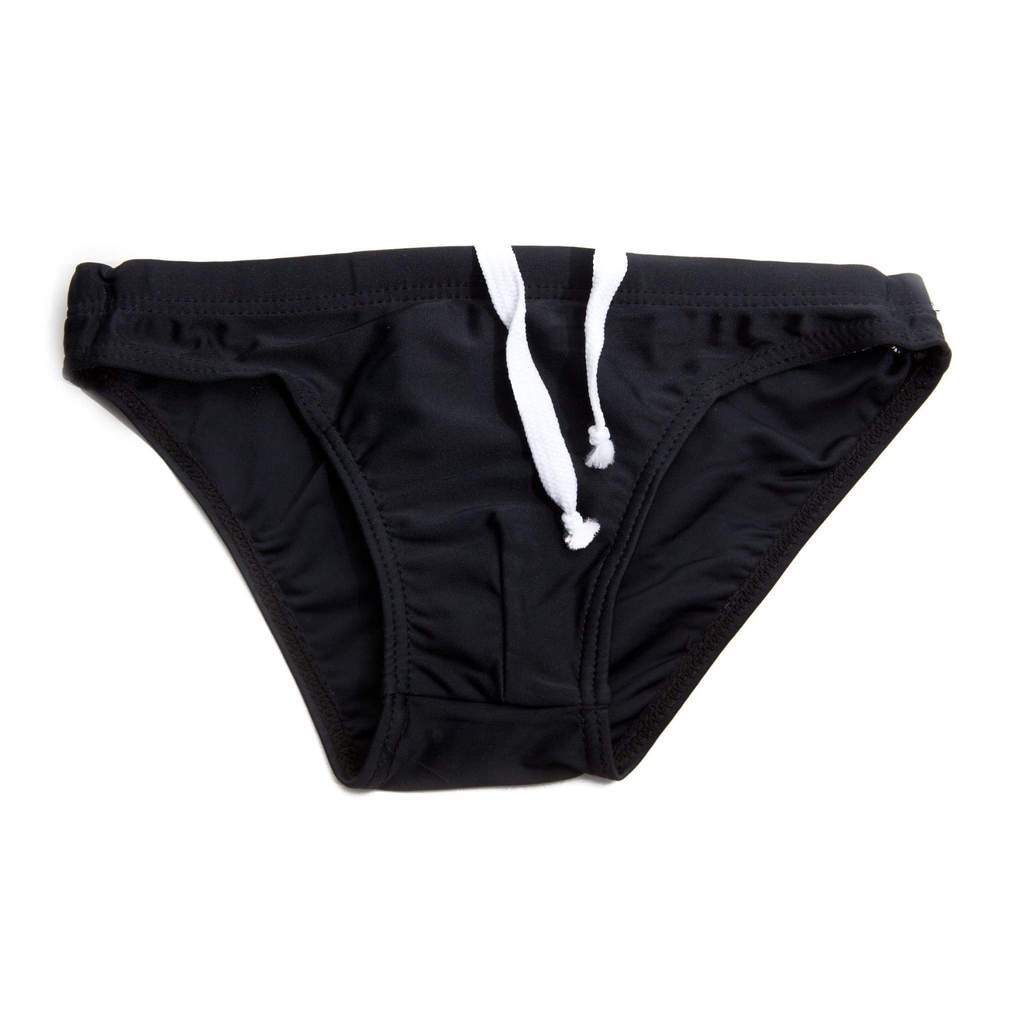
And yet, as I hitched up my Speedos beneath my towel, whilst everyone else was donning Bermuda shorts, it dawned on me that I should have spent more time considering this and less time flying final missions with my Millennium Falcon.
I wasn’t too troubled by this, though. It was only the first swimming lesson of secondary school, and all I had to do was slip into the pool, and back out again, unnoticed. Next week, I’d turn up in swimming shorts. Easy?
No.
Our new PE teacher wasn’t allowing us the privilege of plunging straight into the water. First, us boys and girls had to sit through a lecture on the etiquette of swimming pools: No running; No splashing; No dive bombing, etc.
Not to worry, I thought—sat amongst the other lads at the poolside, I wouldn’t stand out.
Except, I did.
My teacher had spotted me, and my trunks. And at just the right time, apparently. He had just begun a discourse about the inappropriate swimwear that the other lads were wearing. In his opinion, athletes did not wear Bermuda shorts. He then summoned me to come and stand up next to him—for every male and female tween to see—and proceeded to highlight the budgie smugglers I wore, encouraging every lad to copy my slip-streamed example the week after.
Despite my teacher’s endorsement, I didn’t feel like an Olympian at that moment. I felt like a freak. Although the teacher’s voice was closest to my ears, it was the sniggers from the rest of my year group that echoed around in my head.
To be clear, my worry in the changing room was solely about keeping pace with everyone else. I wasn’t bothered by the fact I was wearing Speedos; I just felt fashionably left behind. But standing there, as people laid their eyes, jeers, snorts, and that one sarcastic wolf-whistle upon me . . . well, that was something else entirely. That cut.
I’d honestly never really thought about my body shape prior to that moment. Never had I given a second thought to my spindly legs, knobbly knees, crow neck, or the shear, uninterrupted precipice that descended all the way down my back, from my shoulders to the heels of my feet. But in that one instant, a whole world or awareness and judgement slammed into me like a ton of bricks.
My teacher hadn’t intended this, of course, and I hold no resentment towards him. But in wanting to highlight the proper swimwear, he had also inadvertently highlighted my body to my classmates and myself. At least, that’s how it felt.
I’ve never really opened up about this before. But that moment dogged me throughout my experience of secondary school . . . and beyond. Actually, it’s only within the last decade that I’ve begun to feel comfortable in my own skin. Maybe—as I hurtle towards the age of forty—I‘ve just ceased caring. Who knows? But prior to this, the slightest comment about my knees, or any friend’s comparison between myself and my more athletic-looking brothers, would leave me spiralling down the abyssal depths of a vortex of anxiety and insecurity.
I didn’t have a term for this back then. But I had been body-shamed.
JUDGE NOT
I’m not the first to talk about the weight of body shame, and I’m certainly not unique as a male voice talking about how these unattainable cosmetic standards and toxic forms of masculinity can generate, or aggravate, self-loathing and insecurity. Although, admittedly, not enough of us men do open up and talk about this.
Predominantly, due to a culture of asceticism that is stained with a residue of institutional patriarchy, it’s women who frequently find themselves in the target zone for being measured and rated against some fabled “perfect form”. Because of this, it’s women who are also leading the way in calling this out.
As Selena Gomez countered, in response to some body-hating remarks from an Instagram user, “The beauty myth: an obsession with physical perfection that traps [the] modern woman in an endless cycle of hopelessness, self consciousness, and self-hatred as she tries to fulfil society’s impossible definition of flawless beauty.”[i]
I certainly get this.
Hopelessness . . .
Self-conscious . . .
Self-hatred . . .
Gomez’s terms perfectly capture the relationship that I had with my body for a long time.
I suspect that will surprise some people. And yes, you may even describe this as ridiculous paranoia. But, as I recollect those speedos, and as I listen to the conversations and notice the societal patterns around me, I’m aware that I’m not the only person who has ever been ensnared by this.
To be clear, it wasn’t the right muscle tone that I craved whilst growing up. I craved not being sniggered at, and I thought that having the right body shape was the means to achieve this. Genetics was against me, however. My knobbly knees were hereditary, and squats never could create a gluteus maximus ex nihilo. But, despite my best efforts—and fuelling those efforts—I struggled underneath a universal anxiety about judgement, that I wouldn’t make the cut.
The ‘beauty myth’ has the potential to affect us all, to some degree. We feel the pressure of it all the time; both explicitly and implicitly. For example, whenever I go to buy a pair boxer shorts, why does the packaging always put before me a six pack and a bulge? Whenever ITV roll out the latest contestants for Love Island, why do none of them look like the average, everyday viewer? Why is there, within magazines, adverts, and packaging etc., such an aversion to crow’s feet, middle-age spread, and ‘bingo wings’, and why is there an obsession with ‘abbs’ and thigh-gaps?
Consistently, there is a standard being put before us. But were does this standard originate?
As Gomez highlighted, this myth is “society’s impossible definition”. But that’s a revealing label for this zeitgeist. If understood correctly, this means that we (society), in some way, are also responsible for setting and maintaining this standard, for generating this universal anxiety of judgement that we all find ourselves condemned under. It’s not a simple line between cause and effect; it’s not just that the media shows us one thing, and then we desire that thing. The advertisers use this methodology because we, in some weird way, respond to it.
I’m not a psychologist, and I’m not going to pretend to be so. But it’s like we created our own monster. Or, as the case may be, we’ve inherited this monster, but we keep feeding it.
In the case of myself, the insecurity that was cast upon me beside that swimming pool, replicated. Like a virus, it spread. Because of the judgement of others, I began judging myself, which meant that I began measuring myself against others, which inevitably involves measuring others.
I scrambled about in the darkness I’d been plunged into, searching for a plumb-line to save me. And often, that plumb-line took the form of someone else. Sometimes, this was expressed in wanting to look like another, and at other times, it was expressed in being thankful that I didn’t look like them. To put it another way: In my desperation to exorcise my insecurity, I exercised judgement calls upon others.
I don’t think I’m the only one to fall into this cycle. It’s nothing new. In some ways, it’s an ancient, universal pandemic. Insecurity breeds; prolifically.
BODY ART
In Psalm 139, verse 14, the psalmist says something that takes my breath away:
‘I will praise thee; for I am fearfully and wonderfully made: marvellous are thy works; and that my soul knoweth right well.’ (KJV)
I’m not sure when it was, but there came a point, after reading this Psalm numerous times, when this verse suddenly stood out.
In contrast to the body anxiety of today, this writer expresses confidence.
At first, this can sound just like arrogance. Hey, we’ve all met those people who think they’re the perfect specimen. But the psalmist is free from gloating in an egotistical fashion.
For one thing, the Psalms were penned for communal reflection and worship. It’s not just one person saying this; it’s a gathering of people. Imagine that! Imagine the ethos of a society that doesn’t judge one another’s bodies, but that stands together, shoulder to shoulder, bingo-wing to bingo-wing, reciting these words in unison; affirming to one another that they are each fearfully and wonderfully crafted.
There’s no anxiety here. These words ooze with body positivity.
That might seem like a weird thing to say about something from the Bible. If you asked most people on the street if they thought the Bible promoted body positivity, they would most likely respond with, ‘no’. They’d probably think that the Bible is just concerned with souls, more than flesh. And they’d probably quote a few verses, too.
Upon first glance, this opinion seems valid. After all, the famous 1 Samuel 16:7 reminds us that ‘People look on the outward appearance, but the LORD looks at the heart.’ And Peter, in his first epistle, warns women that, ‘Your beauty should not come from outward adornment, such as elaborate hairstyles and the wearing of gold jewelry or fine clothes. Rather, it should be that of your inner self, the unfading beauty of a gentle and quiet spirit, which is of great worth in God’s sight’ (1 Peter 3:3-4, NIV).
Context is important here, though. In both of these cases, the emphasis in the warning is a concern about the neglect of character and a danger of judging books by their covers. But neither verse is body negative, nor anti-bodies.
If there’s an overwhelming view in the Bible with regards to the human frame, then it is that our bodies are sacred, regardless of shape or size, ability or age. As the psalm above points out, we are all fearfully made.
We might not meet our ‘society’s impossible definition of flawless beauty’, we may not even meet our own definition. But I can declare, you can to, that we are wonderfully made. You’re a living, warm-blooded, breathing, work of art.
I love the courageousness of this psalmist. I haven’t quite got there yet, though. But I need to take the time to ponder these words, grasp hold of them, and let them sink in before I begin playing the comparison game. I am wonderfully made!
LOVE THY NEIGHBOUR
Of course, I don’t want to become a narcissist. The focus in the psalm doesn’t stop at the body: the appreciation of art leads the psalmist to appreciate the Artist and all that the Artist does. The psalm draws us into worshiping God and appreciating God’s handiwork. But, and this is imperative, the psalm also started with the worship of God.
In contrast to our own insecurity-led feedback loop, where our insecurity about bodies either leads us to foster judgement towards certain body types whilst we idolise and worship other body types, the psalmist’s worship of God (not of bodies), leads them to a place of security with their own body, which leads them back to the worship of God, which then leads them to appreciate all the bodies around them.
Instead of trapping us into an endless cycle of hopelessness, self consciousness, and self-hatred, we’re released into a life of thankfulness; a thankfulness that exhibits itself in honouring and giving thanks for those around us.
In other words, embracing that you are wonderfully made also requires you to appreciate that all of those around you are as well. As the above translation of psalm 139 puts it above, ‘marvellous are thy works’, not “marvellous are some of thy works”.
The Passion Translation (TPT) words it this way:
‘I thank you, God, for making me so mysteriously complex! Everything you do is marvelously breathtaking.’
Every human around you is breathtaking!
You are breathtaking!
I’m breathtaking—even in my Speedos.
To paraphrase the sentiment of C. S. Lewis, we have never talked to or walked with mere bodies.[ii] And maybe there would be less body shaming if we could all come to this realisation.
END NOTES:
[i] As quoted by Marie Claire; https://www.marieclaire.com/celebrity/g20834252/celebrity-body-shaming-responses/
[ii] C. S. Lewis’ quote is, ‘There are no ordinary people. You have never talked to a mere mortal’ (Weight of Glory: And Other Addresses (Collected Letters of C.S. Lewis), Zondervan, 2001).
 TRISTAN SHERWIN
Leave a comment