Here’s my longer sermon notes from this morning’s Metro Christian Centre service (dated 7th July 2024), concluding our series journeying through the book of Exodus.
You can also catch up with this via MCC’s YouTube channel (just give us time to get the video uploaded).
‘Love me—that’s all I ask of you’
–Raoul and Christine Daaé, The Phantom of the Opera[i]
READ: EXODUS 40 (NIV)
WEDDING BELLS
There used to be a show on TV called Don’t Tell the Bride.
The concept was simple: With three weeks and £12,000, a hapless and helpless groom had to arrange the “perfect” wedding for his bride to be. The bride had no input at all. She had to wait until the big day to see what her dress would look like, where the venue was and whether there would be a theme to the occasion.
It was a disaster in the making—but that’s what made it addictive. As the show jumped between scenes where the bride shares her dreams for the day and the reality of what the groom is actually planning, you would sit on the edge of your seat wondering how this is going to play out. Almost every episode ended with a distraught bride, in tears, questioning whether the groom knew her and loved her at all.
Which may have been true in some instances. But, in many cases, the grooms had their reasons. They lacked common sense, but they were acting on what they knew.
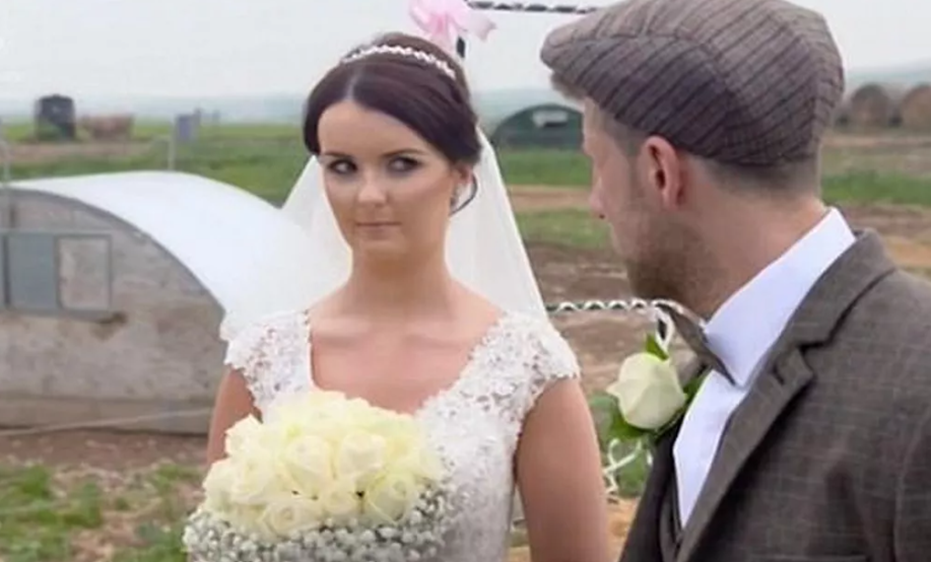
The most famous disaster is probably the groom who misunderstood how much his wife liked pigs, and decided to get married on a muddy, smelly pig farm with the bridesmaids dressed up pig onesies. The bride was not happy at all (as the photo below shows).
One groom and his partner always went to the same place to talk through their arguments. Where better to get married than where they always made peace? So, they got married at Ikea, with all the Ikea customers and staff clapping as the bride travelled up the escalator. It sounds horrible, but it worked out well.
They didn’t have the Swedish meatballs for their meal, though. So it wasn’t the perfect day!
One groom decided it would be romantic to have the wedding in the place where he and his wife to be first made eye contact. It’s a lovely sentiment. The bride, however, was not impressed when she was invited, in her dress, with her hair and makeup done, to literally take the plunge into the local swimming pool.
If you’re going to sign up to doing a TV show like that, you must have some idea that you’re not going to get your typical version of the ‘perfect day’. Even when a TV show doesn’t get involved, our cultures and traditions do, and crazy things can still happen.
For example, in Scotland, there’s a traditional pre-wedding ritual known as The Blackening, where the engaged couple are bombarded with mud and rotten food. It’s a tradition that’s supposed to prepare them for the hardships of married life.
In Wales, there’s a tradition where the groom and his entourage has to fight for his bride, like a mock battle. And when the couple is on the way to the church, the bride tries to escape and the groom has to catch her.
In some parts of Germany and Italy, it’s log cutting. In France, it’s riddles at the door of the bride’s home. In one Indonesian tribe, the couple are locked in a room without a toilet for 72 hours. In Greece, they smash plates. In South Korea, the groom’s feet are beaten while he is questioned by the bride’s family and friends.
Weddings come in all shapes and sizes. Specifics vary. Some seem crazy to us. And yet, despite the strangeness, there are practices and phases that signal to us that a marriage union is taking place.
In ancient middle eastern culture, a traditional wedding also had its practices and phases that would seem strange to us.
First, there would be the stage when the groom and his father (or a servant acting on their behalf), would go to the bride’s house with the offer of marriage and pay a ransom, a bridal price.[ii]
The marriage covenant would also be offered, too. It was usually 7, 10, or 12 items where the groom is basically saying to the bride, ‘This is what I want to build our marriage on. This is who I am. This is what’s important. This is what I hope is true of us as we’re married together.’
In the ancient world, the bride wasn’t a part of making or exchanging vows, but she did have the free choice of accepting or rejecting the terms of the covenant. As such, a cup of wine would be offered to her, symbolising the covenant, and she had the free choice to push it away, saying ‘no’, or she could drink from the cup as a way of saying ‘yes’ to the proposal.
If she drinks, then at this point, even though the marriage hasn’t been consummated, they would be seen as legally married.[iii] The terms of the marriage covenant would then be written up and ‘put in stone’, so to speak.
Upon saying yes, the groom would then go and prepare a place in his father’s house where he and his bride would dwell and the marriage would be consummated. This could take some time to do—maybe up to a year! But, at some point, when the dwelling place was ready, the bridegroom, along with his family, would come back for his bride, and lead her to their dwelling place, inviting all her family and the community to join them, and then the marriage, with all the feasting and dancing, would begin.
GOD’S MARRIAGE GOAL
Now, if you’re familiar with the scriptures, I imagine your making all sorts of connections with some of the things Jesus taught and the stories he told. You may also be remembering the story of Isaac and Rebekah in Genesis 24.
But the Exodus is also one big wedding story.
God calls and ransoms a bride out of the house of Egypt, the house of bondage.
Through Moses, acting as a servant officiating the ceremony, God then brings this bride to Sinai, and offers to them the Ten Commandments (Ex. 19 & 20), the terms of his marriage. God essentially says, ‘I want to enter into a special relationship with you, and it will look like this.’ There’s no demand here—it’s an invitation.
I’m saying this because, they are not rescued from Egypt after they’ve said yes! They are rescued from Egypt, first; they are given freedom and given a free choice of saying ‘yes’ or ‘no’. At Mount Sinai, God expresses his desire, ‘I’d like to be in a special covenant relationship with you as a nation. If you say yes, then you will be my own special treasure.’(Ex. 19:4-6). This is wedding talk. It’s what a groom calls his bride.
On three occasions, Israel voluntarily said ‘yes’ to God’s proposal. Once, before the terms of the covenant are read, and twice afterwards (Ex. 19:8; 24:3, 7). Moses then sprinkled them with the blood, symbolising the cup of wine, symbolising they have accepted the terms of marriage, and then Moses is invited by God to put those terms in stone (Ex. 24:12).
They are legally wedded. And yet, the marriage hasn’t happened yet.
From Exodus 24 onwards, Moses is given the task of preparing the Tabernacle, the dwelling place, the marriage tent—where God would come and be married to these people.
And then, here, in the final passage of the book, Exodus 40, God’s glory, God’s weightiness, God’s very self, comes and fills the tabernacle.[iv] God dwells with his people and is married to them.[v]
If it were not for the horrible interruption we encountered in chapter 32, and that took two chapters to resolve (33 & 34), we would have had fourteen uninterrupted chapters dedicated to the preparation of the marriage dwelling place.
Fourteen chapters out of forty, thirty-five percent of the book of Exodus, is dedicated to the tabernacle.[vi] It seems disproportionate, and we often struggle to understand why it has so much focus. But it does so, because the marriage union of God and people is what the whole story of Exodus is about.
Maybe you’ve never thought of it that way. If someone had asked you what Exodus is about, is that how you would describe it?
If we were writing this story, maybe we wouldn’t have chosen this tent and this dwelling to be the climax of the book. Maybe we would have chosen another finale?
Like most of the films I’ve seen adapted from this story, maybe we would have ended it with the people getting out of Egypt—especially if we think that this story is solely about liberation from darkness and oppression. Maybe we would do this because that’s what we want: freedom, which is a noble thing.
Maybe, remembering the promises that came before this rescue mission, we would have made entering the Promised Land as the climax. Surely, the prize is the land flowing with milk and honey, we think, because that’s what we want: space to live out our freedom.
But as significant as liberation is, and as seemingly great as the land promises to be, the purpose of the exodus from Egypt is that God wants and is searching and redeeming for himself a people that He can dwell with.
God’s goal is to have union with humanity.
God’s goal is to have a marriage between Heaven and Earth.
ECHOES AND SHADOWS
This has always been God’s goal, God’s original and unchanging intent, since the very beginning of everything. Even before the beginning of anything.
I’m not going to labour the point (you can pick up a commentary, or two, instead), but, if you read this passage closely, and if you consider all the instructions for making of the tabernacle, you’ll see that the crafting of the tabernacle in Exodus mirrors God’s own creation of the universe, as shown in Genesis 1 and 2.
Consider the following, for example:
‘And God saw all that He had made, and behold, it was very good… By the seventh day God had finished the work he had been doing; so the seventh day he rested from all his work. And God blessed the seventh day and made it holy, because on it he rested from all the work of creating that he had done.’
(Gen. 1:31, 2:2-3)[vii]
‘When Moses saw all the work—and behold, they had made it as the Lord had commanded—Moses blessed them… So Moses finished the work. Then the cloud covered the Tent of Meeting, and the glory of the Lord filled the Tabernacle.’
(Ex. 39:43; 40:33b-34)[viii]
There are lots of key words in the Hebrew that occur in both of those accounts. They put forward the sense that the Tabernacle is an echo of Eden, a micro version of a restored creation.
Creation, as Isaiah’s notes, was made to be a temple, God’s dwelling and resting place (Isa. 66:1-2). Or, as the Psalmist put it, in Psalm 104:2, God stretched out the heavens, the sky, like the sheet of a tent, like the coverings of the tabernacle. In the original intent of God, earth was to be a dwelling place. The Garden of Eden was God’s sanctuary and, in the beginning, humanity’s dwelling place coincided with God’s earthly dwelling.
There was a marriage of heaven and earth.
We know the story. We know that God’s intent was not the same as humanity’s wants, and in their God-given freedom and in the space God provided for them, Humanity pushes away God’s proposal. As a result of this, life gets messy and murky, creation gets tarnished, there’s bondage and darkness, sin and death enter the picture, and an exodus happens.
But God doesn’t give up. God wants union. God wants to dwell. As Paul writes about it in one of his letters, ‘Long ago, even before he made the world, God loved us and choose us in Christ to be holy and without fault in his eyes.’ God’s unchanging plan has been the marriage of heaven and earth (Eph. 1:4-10, NLT).
So, even when humanity blows it in Eden, God proposes a betrothal again.
In Genesis 12:1, God comes to Abram and says, ‘”Leave your country, your relatives, your father’s house, and go to a land that I will show you.”’ (NLT). This is marriage language. These are the words of a groom showing up and saying, ‘Leave where you are. I want you to come with me to a place I’m preparing for you.’
Of course, God’s proposal to Abram is not for Abram’s sake alone. But through him, God wants to launch something that will be a blessing to all others, something that will see the rest of humanity also embrace this proposal of a marriage union.
We know the story. Abram has a few bumps and scraps, but overall he does well. But his family gets messy and murky. Things go awry. Ultimately, they end up in Egypt, a place of darkness and bondage, a graveyard of a place, totally opposite to God’s Edenic marriage between heaven and earth. But God doesn’t give up. As we’ve seen as we’ve gone through Exodus, God rescues, proposes and invites a response.
Even in the midst of Israel’s greatest failure in the Exodus, God sticks with them. Israel, with the Golden Calf, cheats on the wedding day, as the tent is being planned and prepared, and we saw the mayhem that ensued. When it happened, there was this looming sense of a setback in God’s plan for the whole world. But Moses prays, God forgives, and things press forward, unhindered.
Just before the great disaster of the golden calf, the last instruction we are given in the preparation of the tabernacle is about the Sabbath (Ex. 31:12-17). After the disaster, the first instruction we are given about the tabernacle is the Sabbath (Ex. 35:1-3).
God just picks up right where we left off, like we hadn’t skipped a beat.[ix] It’s not without a struggle though. It always seems to take an act of enormous grace to overcome the enormous resistance of the human heart and for God’s dwelling to be set up on earth.[x]
But still, at the end of Exodus, according to the scriptural story, for the first time since Eden, God’s glory dwells. This tent is not just a religious building, like how you and I would view a church building. Rather, something of the paradise that was lost in Adam and Eve is gotten back. It’s a piece of heaven on earth.
It’s not solely that we are given an echo of Eden, though. We also get an earthy glimpse of the eternal future. This tabernacle was always an advance signpost in this world of God’s ultimate goal: that the knowledge of his glory would fill the whole earth (Hab. 2:14).
Exodus 40 is only the end in a very temporary sense; ‘this [tabernacle] is but the foreshadowing in linen, goat-hair, and leather of the day when the glory of God will fill the city of God and all creation will hear the voice that once spoke at Sinai, saying, “Look! God’s dwelling place is now among the people, and he will dwell with them. They will be his people, and God himself with be with them and be their God” (Rev. 21:3)’[xi]
Ultimately, we don’t look forward to a tent that people have made, and that only occupies a patch of land, no matter how good it may look. Rather, we look forward to a time when creation itself will be renewed from top to bottom, when there will be no more death and sorrow, mess or murk, and when creation fulfils its purpose of being the habitation of God and humanity together (Rom. 8:18-25). Just as the story began with creation and marriage, so it will culminate in the marriage of heaven and earth, the marriage feast of the Lamb (Rev. 19:7; 21:9).
BLOOD & WATER
God’s goal is marriage: The marriage of Heaven and Earth; The marriage of God and humanity; The marriage of you and your creator.
We often say that God is not after religion, but relationship. But that’s not true. God wants more than relationship; God wants nothing less than union.
The tent is just a taster of this union. God’s proposal and wedding to Israel is but the beginning of God’s plans for all humanity, all the world.
We know the tent is taster, because we know the story.
We know, as we go beyond Exodus, as we read what happens when the people enter the land, as they settle in their God-given freedom and God-gifted space, that they never keep faithful in this marriage. They are given a sample of what was lost and a taster to keep them looking forward, but they hunger instead for what the other nations have, and things go awry, darkness and bondage return. The prophets, again and again, have to spell out how unfaithful they have been and how heartbroken God is.
But, the prophets also promise that God has not given up, and that he is still pursuing them, and us, to the extent that he will make a new covenant with them—a fresh proposal of marriage that all the world will be invited into (Isa. 25:6-8; Jer. 31:31-34; Eph. 1:9-10; 2:14-3:6)
God’s ultimate proposal doesn’t come through Moses, and neither does it come through a messenger. God comes himself. God tabernacles among us, incarnate in Jesus, giving us the ultimate taster of his glorious presence on Earth, as the opening of John’s gospel reminds us.
Over the past few weeks, we have mentioned John’s gospel a few times. Like all the gospels, it contains plenty of echoes of the Exodus story in order to stress the importance of what Jesus was doing. But John’s gospel also echoes the creation story, and is rich in marriage language. It’s more than a retelling of Genesis and Exodus, John’s gospel is a marriage ceremony.
In John 14, Jesus utters the famous words that, through the cross, he is going to prepare a place for us (Jn. 14:1-3). It’s marriage talk.
The famous ‘it is finished!’, breathed out by Jesus on the cross (Jn. 19:30), is only mentioned in John and is an echo of the Genesis story and Exodus 40. It’s marriage talk.
John records seven signs (miracles) that Jesus performs. His first sign is a reminder of the first plague in the Exodus story, where water turns into blood—life turns to death. Except, in Jesus’ miracle, he does something else, he turns the water into wine, the drink of marriages.[xii] And this all takes place at a wedding.
Even upon the cross, as Jesus’ side is pierced, and water and blood flow out, there’s an echo of the first marriage. In Genesis, while Adam slept, God opens up his side and from the wound produces a bride. As many have noted, there’s something in this act of being opened up, of God pouring out his very life, that creates God’s bride.
Even in his death, God proposes marriage.
You see, there’s nothing at fault with God’s love for us. God goes through all extents to show us the depth of his enormous love for us. As God says, through the prophet Jeremiah, ‘I have loved you with an everlasting love.’ (Jer. 31:3).
The real question is, do we love God? That’s all Go is asking of us. To borrow some words from the musical, Phantom of the Opera, ‘Love me—that’s all I ask of you.’
This love is not something we are called to drum up or manufacture within ourselves. You cannot fabricate love and it cannot be forced from us. God doesn’t want us to fake it and neither will God coerce it from us. Forced love, is not love. Love faked, is not love.
Yet, if we would take the time to look at God’s proposal, if we would dwell upon all God goes through in his desire to be with us, if we would take but a moment, each day, to consider God’s passion, then I firmly believe we would love God in return.
As 1 John puts it, ‘It’s not that we loved God, but that he loved us… We love because he first loved us.’ (1 Jn. 4:10a, 19, NIV)
It’s experiencing God’s love that generates our love. Do you allow God’s love for you to produce within you a love for God?
And, as the writer Frederick Buechner advised, ‘‘If you have never known the power of God’s love, then maybe it is because you have never asked to know it—I mean really asked, expecting an answer.’[xiii]
As our time in Exodus comes to a close, I want to invite you to embrace the God who embraces you, to say ‘yes’ to the proposal, to dwell with the God who dwells with us. The future God has prepared for you is much better than an episode of Don’t Tell the Bride, more glorious than Ikea and the squalor of a pig farm. It’s life, in all its fullness, for all eternity.
God has conquered the grave in order to bring us into the cradle of a new life with Him.
There’s no marriage story stranger than this. There’s no marriage story that matters more than this.
Will you say, ‘yes’?
My prayer for you, and for me, cannot be expressed any better than the Apostle Paul prayed all those years ago:
‘When I think of all this, I fall to my knees and pray to the Father, the Creator of everything in heaven and on earth. I pray that from his glorious, unlimited resources he will empower you with inner strength through his Spirit. Then Christ will make his home in your hearts as you trust in him. Your roots will grow down into God’s love and keep you strong. And may you have the power to understand, as all God’s people should, how wide, how long, how high, and how deep his love is. May you experience the love of Christ, though it is too great to understand fully. Then you will be made complete with all the fullness of life and power that comes from God.
Now all glory to God, who is able, through his mighty power at work within us, to accomplish infinitely more than we might ask or think. Glory to him in the church and in Christ Jesus through all generations forever and ever!
Amen.’
–Ephesians 3:14-21 (NLT)
ENDNOTES:
[i] ‘All I Ask of You’, from Andrew Lloyd Webber’s The Phantom of the Opera
[ii] In the Hebrew, the word is mōhar (מֹהַר). An example is in Genesis 32:12, when Shechem is trying to negotiate a bridal price for Jacob’s daughter, Leah. I won’t digress here, only to say that, when we encounter the word ‘ransom’ in the New Testament, our 21st century minds often jump to media references about hostage negotiations. But in the middle east, a wedding would probably come to mind.
[iii] Hence, why, in Matthew 1:19, Joseph sought to break of the engagement with Mary after discovering her pregnancy. There was a legal proceeding to go through, unlike today, because they were legally betrothed.
[iv] In the Hebrew, the word for dwell is shakan (שָׁכַן), and is used throughout the bible, but, on the theme of the tabernacle, in Exodus 25:8 and 29:45-46. It literally means to ‘take up residence’, or ‘to settle down and abide.’ In later Judaism, the glory of God is referred to as the Shekinah, from the same root, which means ‘the residing one.’
This dwelling place was a unique moment, a revolution in the religious thought of the day. No other ancient religion talked in this way about God. As the late Rabbi Jonathan Sacks pointed out, ‘The verb “to dwell” had never been used in relation to God. The root sh-kh-n means neighbour, someone who lives next door. God was about to become not just the force that moves the stars and changes the course of history, but also one who is close.’ (Rabbi Jonathan Sacks, Covenant & Conversation: Leviticus: The Book of Holiness (Maggid Books & The Orthodox Union, New Milford, CT, 2015), p. 11)
As in the case of all dwelling, from a human perspective, it means to be fully present in a place or with a person. This desire strikes at the heart of our human craving and experience. As Frederick Buechner worded it, ‘It is not objective proof of God’s existence that we want but, whether we use religious language for it or not, the experience of God’s presence.’ (Frederick Buechner, The Magnificent Defeat)
[v] As a common theme in the Old Testament, God’s relationship with Israel is often set in terms relating to marriage (e.g. Isa. 54:1-8; Jer. 2:1-2; 31:31-32; Ezek 16; Hos. 2:2-16; 3:1-5). For this reason, adultery was a common analogy when talking about Israel’s idolatry to other gods.
[vi] Based on chapter numbers, not word/verse quantity. Although, if I had the patience to do the math with the word count, I suspect it wouldn’t be far off (if not a greater percentage).
[vii] It’s worth noting that the use of the word resting is important. God doesn’t merely grab forty winks after the finishing the work of creation. The sense of this resting is dwelling. Psalm 132, for example, uses resting and dwelling interchangeably to describe the sense of abiding presence (Ps. 132: 7-8, 13-14). Solomon also quotes this Psalm, and sense of residence, in his prayer of dedication of the Temple (2 Chron. 6:41), again, equating resting with dwelling.
[viii] Both translations taken from Rabbi Jonathan Sacks, Covenant & Conversation: Exodus: The Book of Redemption (Maggid Books & The Orthodox Union, New Milford, CT, 2020), p. 334
[ix] The Sabbath connection is also important, again, because of the connection to creation. The construction of the tabernacle is completed and culminates on the 7th day of rest—the day God dwells within it, echoing the story of creation.
[x] To paraphrase the words of Tom Wright, Revelation for Everyone (SPCK, London, 2012), p. 192
[xi] Christopher J. H. Wright, The Story of God Bible Commentary: Exodus (Zondervan Academic, Grand Rapids, Michigan, 2021), p. 610
[xii] Jesus’ last miracle also echoes Exodus, yet also inverts it. The final sign of Exodus was the death of the firstborn. But, in John 11, Jesus reverses the death of the firstborn, Lazarus, raising him from the dead.
[xiii] Frederick Buechner, The Magnificent Defeat (HarperOne, HarperCollins Publishers, New York, NY, 1985), p. 35


Leave a Reply